Vienna
2025
curated by Angela Zach-Buchmayer
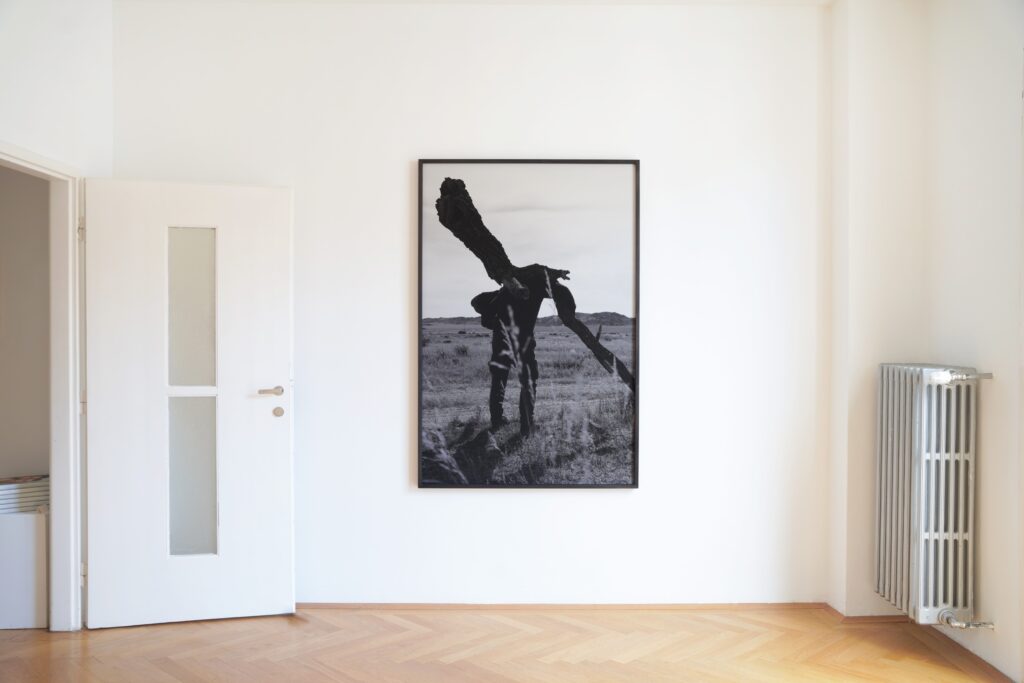
For several years, Elena Kristofor has been engaging in her artistic work with the cultural coding of “nature”. At the core of Elena Kristofor’s artistic practice lies a reflection on nature as a cultural imaginary – a historically evolved construct that presents nature as primordial and untouched, while at the same time concealing its own constructedness.
Invited by Nomad Spirit, Kristofor spent four weeks in the Gobi region, about 288 kilometers south of Ulaanbaatar. Her residency was part of a program using artistic strategies to draw attention to ecological change in Mongolia. Although Mongolia is one of the most sparsely populated countries in the world, the effects of climate change are strikingly evident: the average temperature has already surpassed the two-degree threshold set by the Paris Agreement. Droughts, fierce winds, and extreme cold spells increasingly destabilize ecological balance.
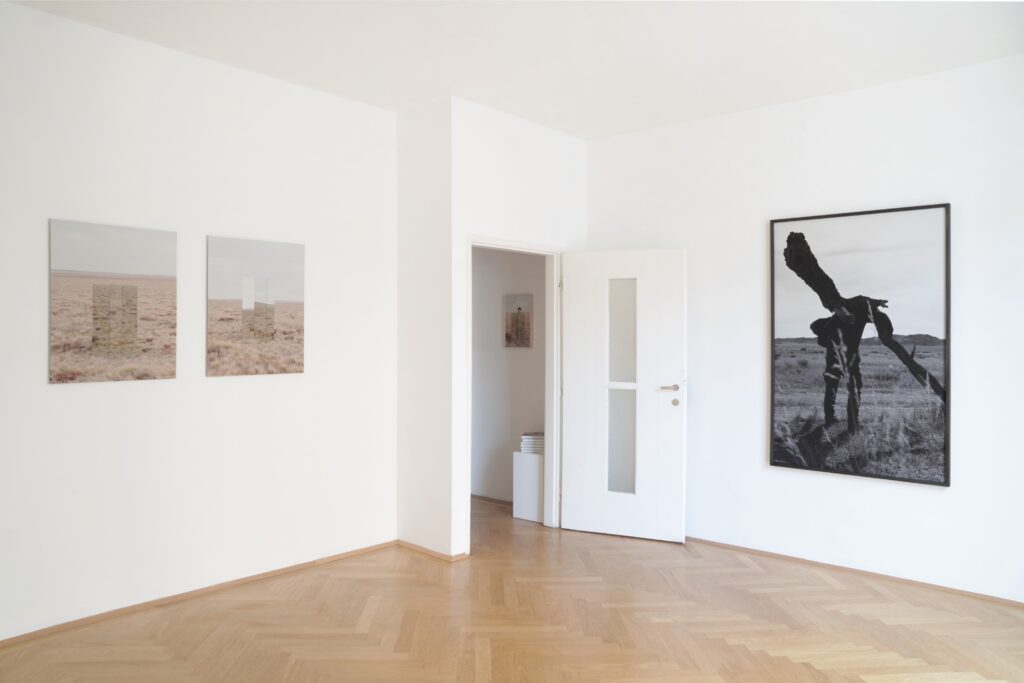
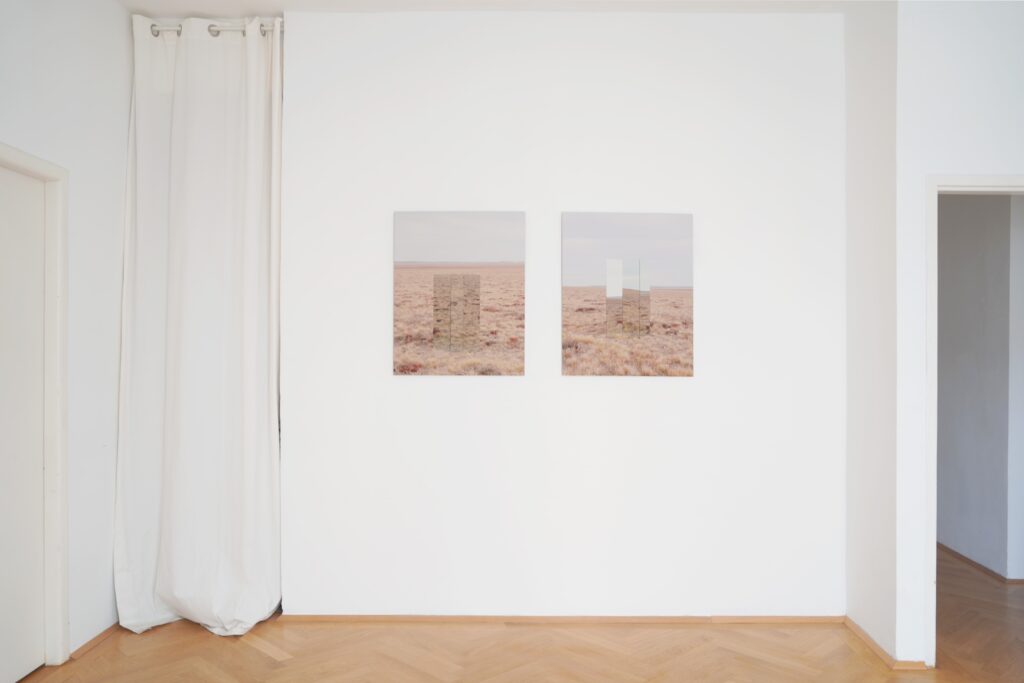
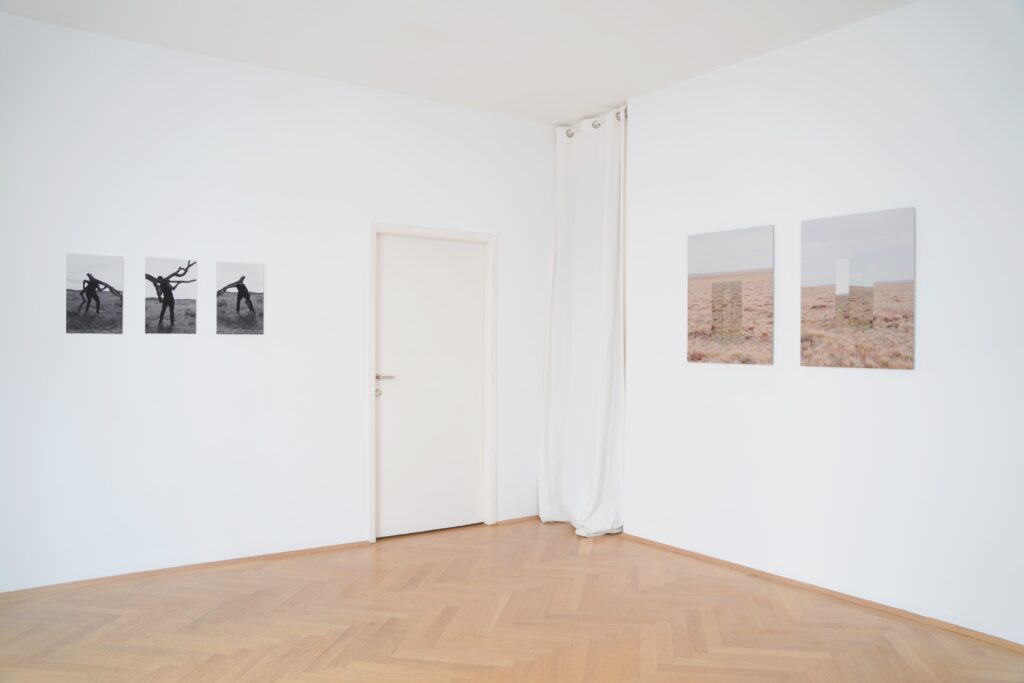
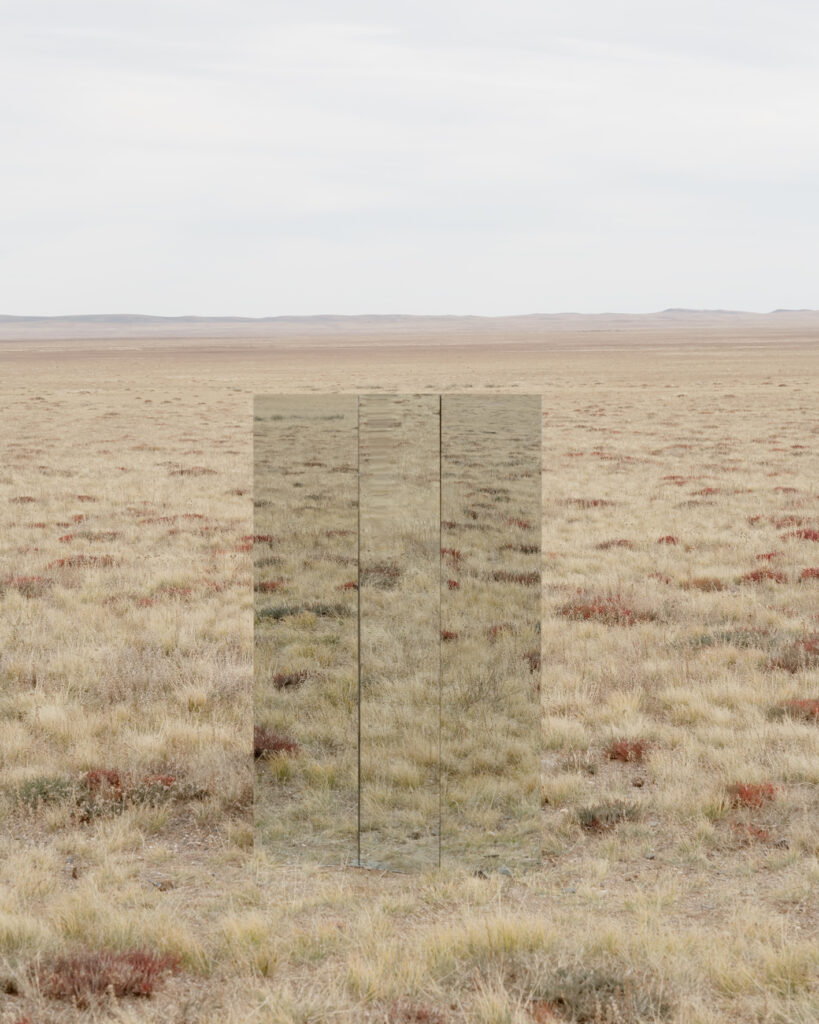
Together with her colleagues from Nomad Spirit, Kristofor explored the unique steppe landscape of Mongolia and was invited to translate her impressions into a site-specific artistic intervention. The vast expanses – defined by open, treeless horizons and gently rolling hills – are among the last remaining large-scale grasslands on earth, and formed the atmospheric foundation for her work on site. From this intense engagement emerged two new series, presented for the first time in Vienna in the exhibition Steppe Scape.
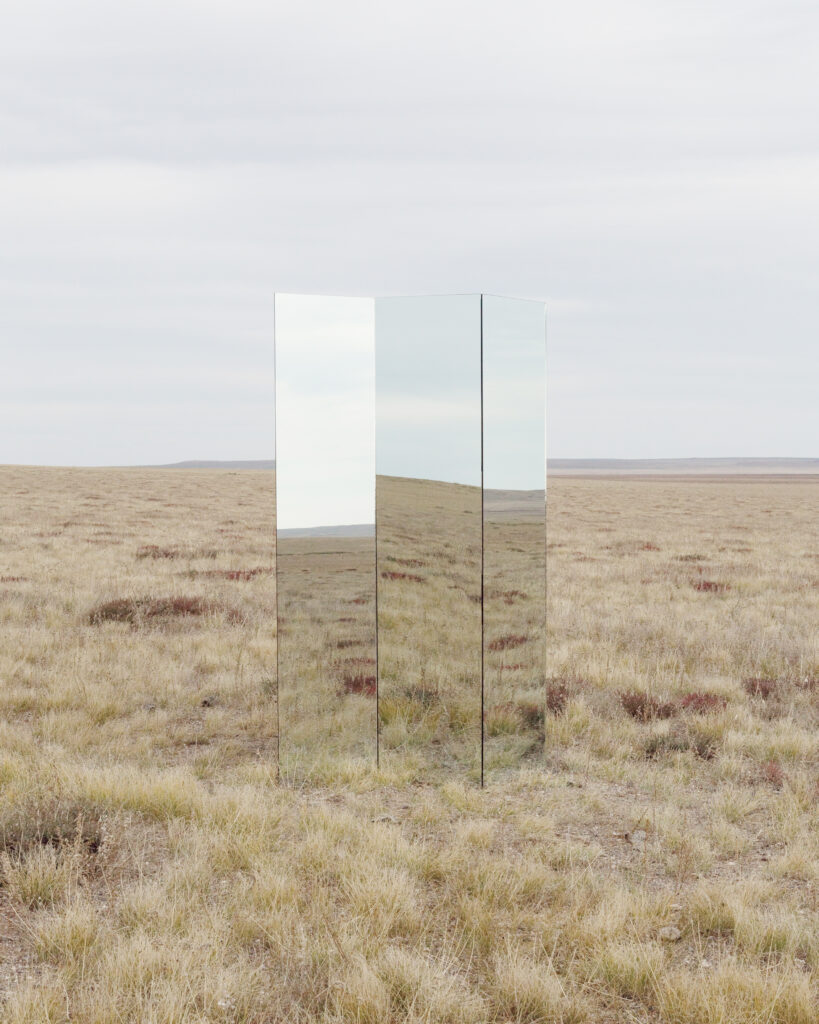
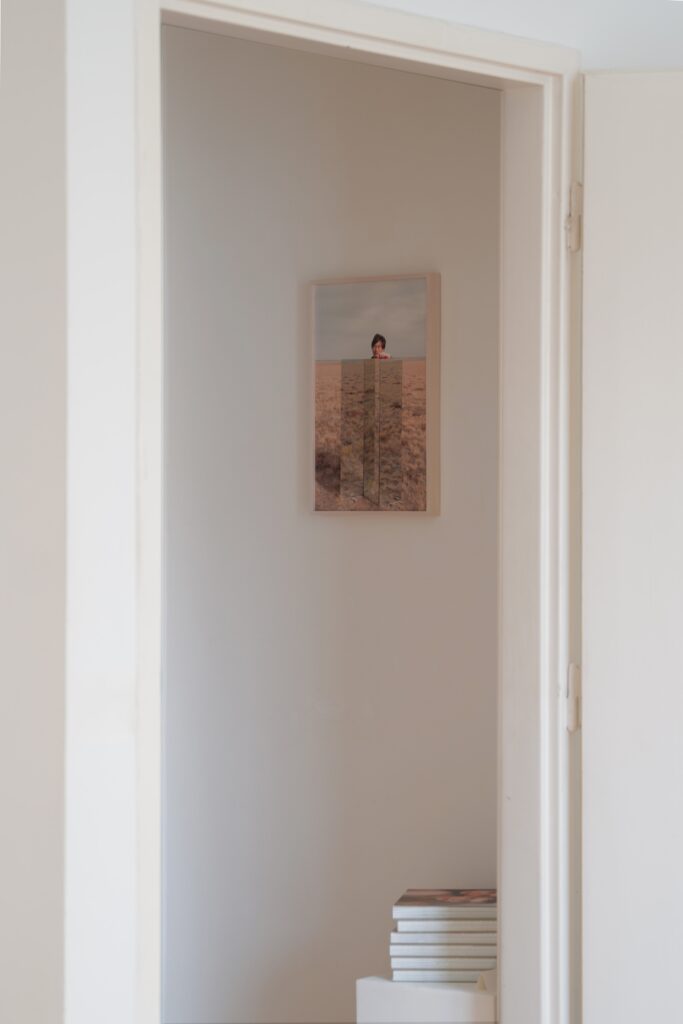
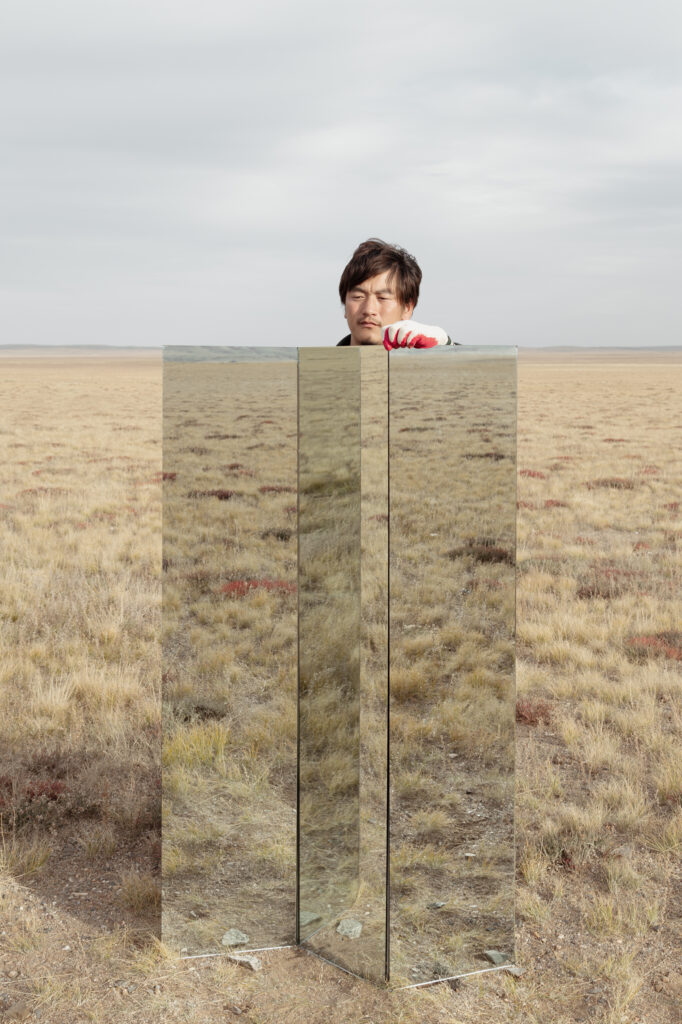
Kristofor’s color photographs extend the inquiry begun in her series Anomalie im Raum (Anomaly in Space), which deliberately unsettles the conventions of classical landscape photography. By working with mirrors, she subverts central perspective as the dominant ordering system, thereby dismantling familiar notions of spatial coherence. Mirroring functions here as a conceptual strategy of spatial formation: space is folded, fractured, displaced. Drawing on her own vocabulary, Kristofor refers to this as a “folding of space.” The result is a set of surreal, visually ambivalent landscapes in which nature no longer appears as a static backdrop but as a mutable, self-reflexive pictorial field.
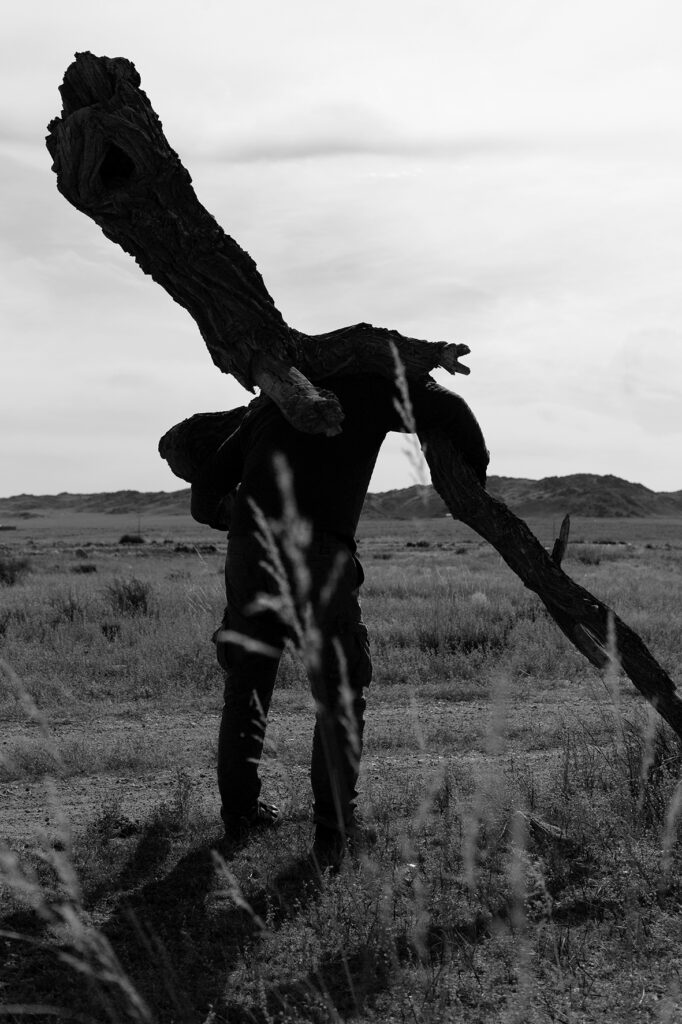
The black-and-white series Dance or Struggle with Nature reflects on the fragile balance between human beings and the natural world. Through sculptural gestures, the human body merges with the landscape – shaping it and at the same time being shaped by it. In Mongolia, a symbiotic relationship between people, animals, and environment has existed for centuries; yet this balance is under increasing strain. Nomadic livestock herding continues to expand, while fertile grazing lands are vanishing at alarming speed as a result of climate change. Traditional lifeways collide with economic interests – a development that raises fundamental questions about the endurance of this relationship.
Steppe Scape invites viewers on a visual journey through a landscape that is at once awe-inspiring and endangered. Kristofor’s works unfold a strong visual presence while sketching a dystopian outlook on a possible future – questioning, through the lens of photography, the images and assumptions that shape our relationship with nature.
The exhibition is part of the Foto Wien Festival, curated by Angela Zach-Buchmayer.
As part of the exhibition, an artist talk featuring Elena Kristofor and Verena Kaspar-Eisert, moderated by Angela Zach-Buchmayer, took place. Under the theme “Dynamic Future” of this year’s Foto Wien Festival, the talk, titled “Two Degrees Plus”, addressed one of the most pressing and unpredictable issues of our time: climate change.