Elena Kristofor, Esther Vörösmarty
Alte Post, Vienna, Austria
2016
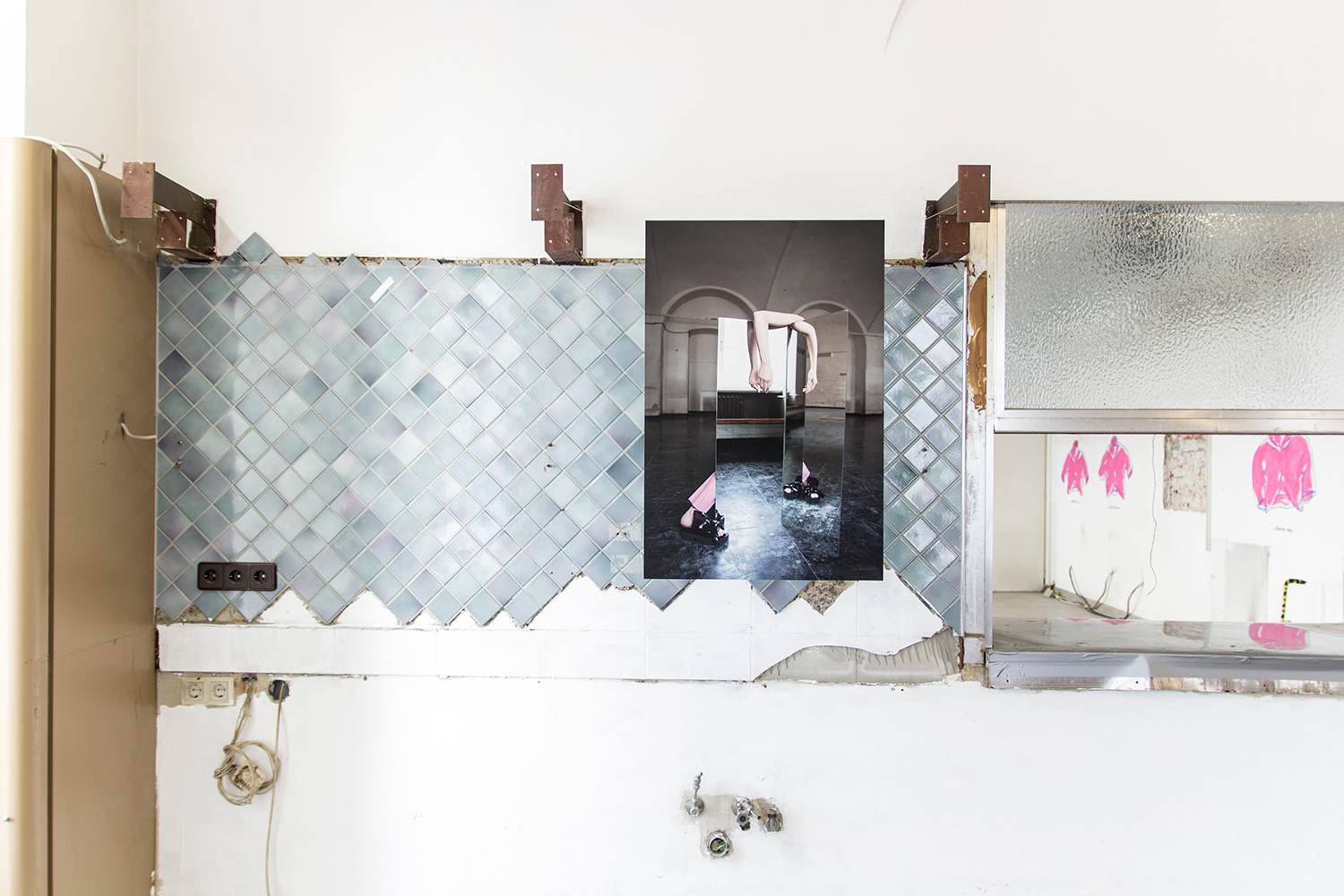
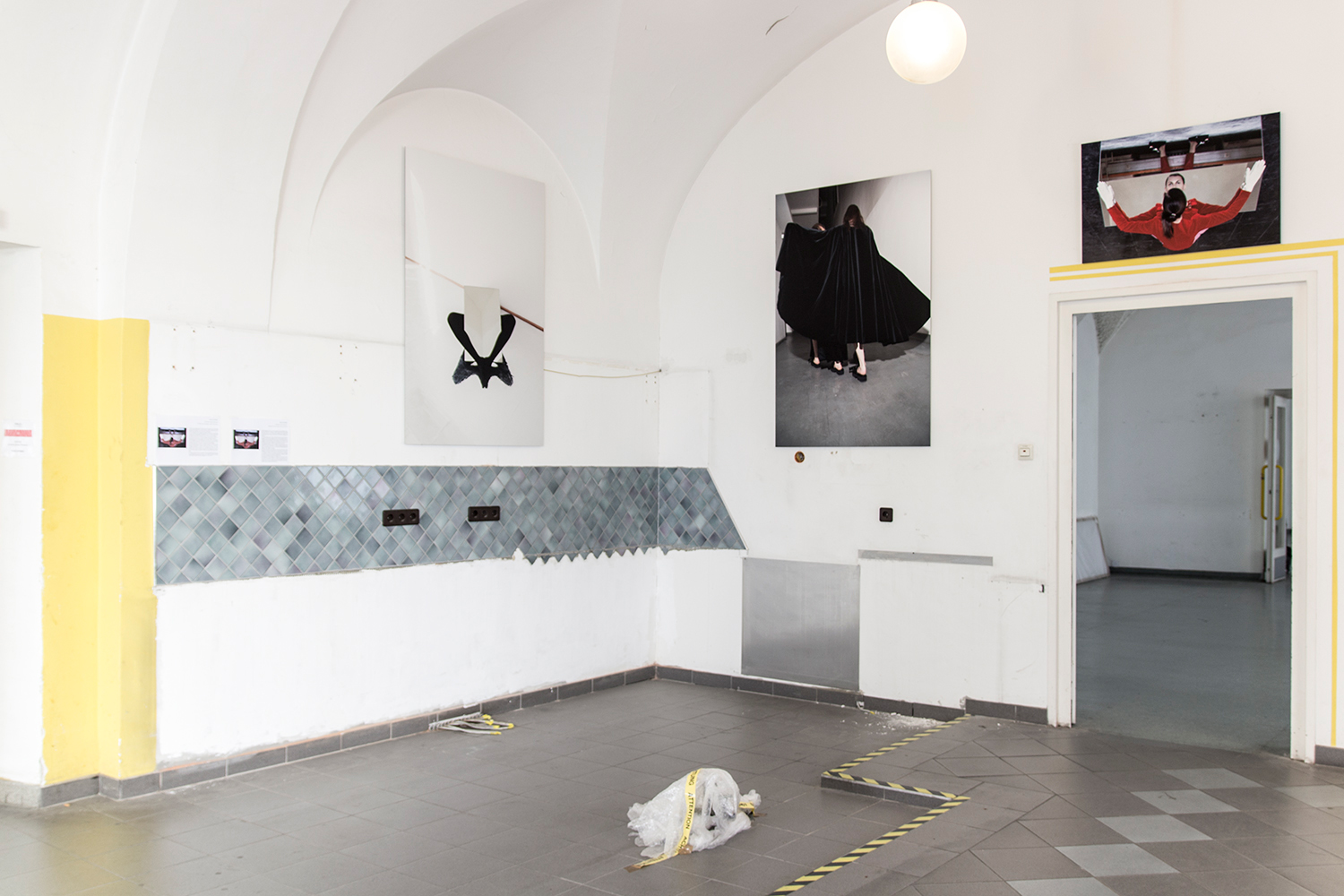
Horror films have always been effective at bringing fears and underlying shifts in society to light. Recently, a shift has taken place as this genre has become increasingly popular in the mainstream, a trend that may stem from the fact that critical and nuanced thinking – and the resulting heightened awareness – is being practiced by more people than ever before.
In the 1970s, with the help of Sigmund Freud’s daughter Anna Freud, a new, more nuanced concept of the self was developed and vigorously promoted to the individual: by creating a conscious need for individuality, companies were able to sell a broader range of products – this desire for uniqueness was thus monetized. This mindset, which brought with it a fear of excessive conformity, was particularly well reflected in horror films; an excellent example would be the 1978 film “Invasion of the Body Snatchers.”
Around the same time, there was also that subgenre of horror film that featured stylization taken to the extreme as a fundamental element; the films of “Giallo Studio” focused on the world of the beautiful with Lynch-like exaggeration, placing design and fashion at the forefront, only to then attack this world with extreme brutality.
The concepts of individuality and capitalism are deeply intertwined; the market now responds with increasing speed to individuals’ attempts to distinguish themselves. For example, characteristics of subcultures are rapidly “swallowed up” and, in the blink of an eye, offered to a broader consumer base in a more digestible form. All this despite the fact that self-images are generally regarded as fragile and changeable, and are increasingly constructed – at least in part – from fragments within a postmodern mix-and-match mentality.
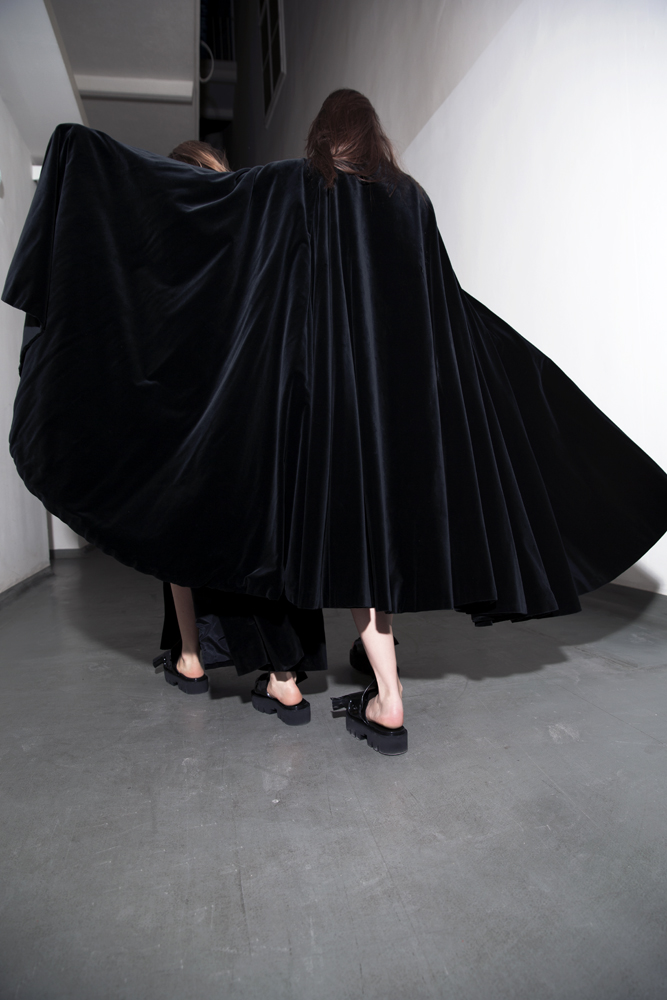
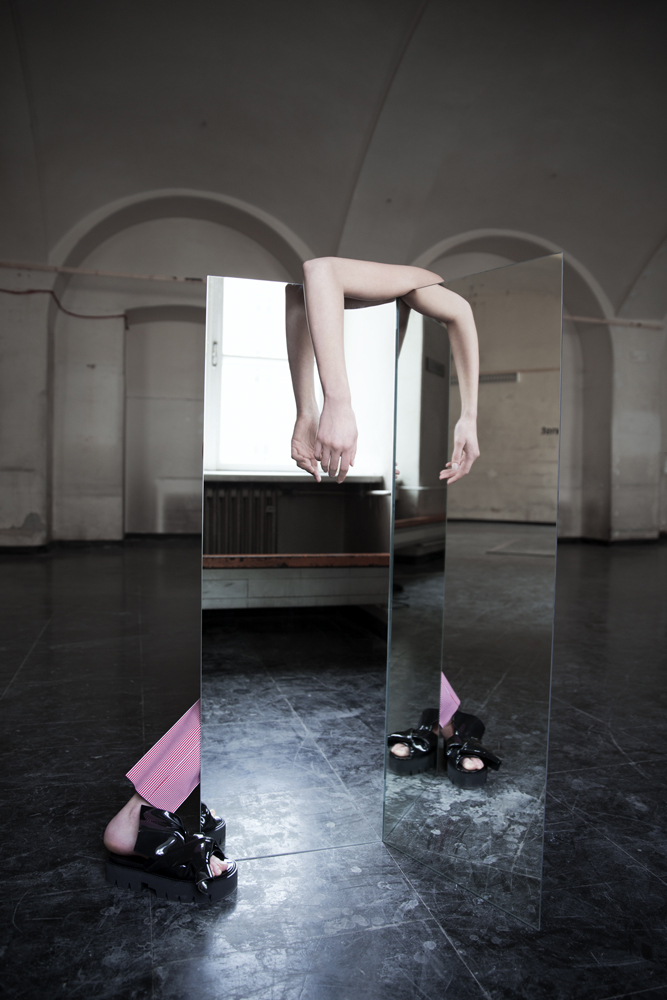
With this exhibition, we aim to shed light on the tension between these two approaches to the themes of identity, consumer behavior, the dazzling world of fashion, and the latent eeriness within it, as seen in 1970s horror films, and we also view it as a tribute to the colorful exaggeration of Giallo films. The question could also be to what extent Giallo is still relevant today and how one can convey its essence in a single shot.
Sandra Petrasevic
translated by the artist